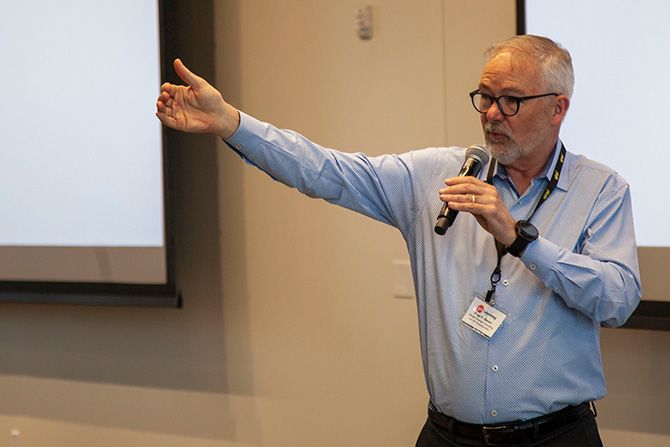




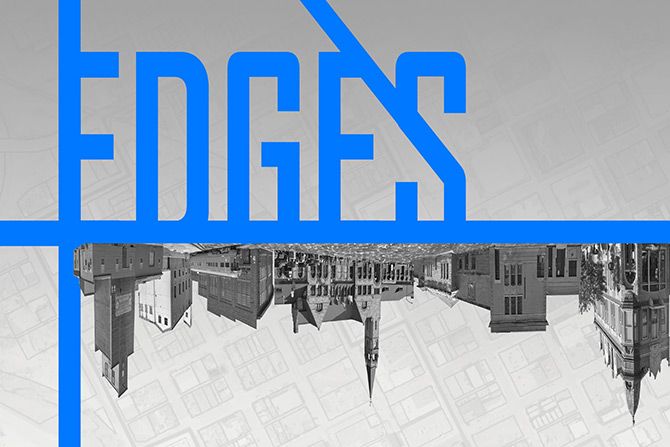

AIA Wyoming hosted its 2025 Spring Conference in Cheyenne at the Blue Community Events Center on April 24-26. The theme of the conference was “Edges,” which focused on boundaries, transitions, interfaces and frontiers, either physically or metaphorically, in terms of ideas or technology. The four nationally recognized speakers were an exceptional group who seamlessly integrated the theme into each of their presentations. Speakers included the 2023 AIA Gold Medal Winner, a former AIA National president who recently published a new book, a university professor with experience building in Antarctica, and an AIA fellow with three recent net-zero projects.

Kate Diamond, FAIA, LEED AP, was our first speaker on Friday. She is the civic design director at HDR and a design principal based out of their Los Angeles studio. She was the first woman to serve as president of AIA Los Angeles and currently serves on the AIA-LA COTE Committee and the Board of USGBC. She has also served on the National Peer Review Council for the U.S. General Services Administration’s Design Excellence Program since 1996. Kate’s presentation, “Barriers | Thresholds | Intersection | Integrations: an exploration of projects shaped by edges,” was a discussion of six of her key projects that achieved high levels of environmental performance, even though that wasn’t initially a goal of many of the projects. Three of her projects achieved net zero.

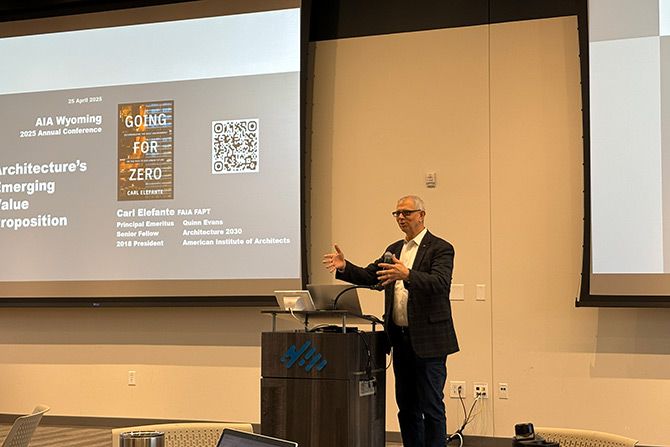
Carl Elefante, FAIA, is principal emeritus of Maryland-based Quinn Evans Architects (recipient of the 2024 Firm Award) and a former AIA National president who recently published a book on sustainability, “Going for Zero.” Following his presentation and during breaks, he signed books for those attending the conference. Known for coining the phrase “the greenest building is … one that is already built,” Carl elaborated on that belief in his presentation, “Going for Zero: Decarbonizing the Built Environment on the Path to Our Urban Future.” He argued that reusing existing buildings is one of the most sustainable things we can do, and that this makes architects especially relevant in the 21st century. He illustrated the amount of investment, both financially and in terms of carbon footprint, within existing buildings and the inefficiencies of demolishing old buildings.
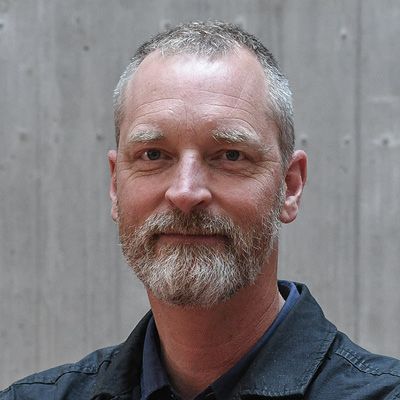
Erik “Rick” Sommerfeld is an architect, associate professor, and director of ColoradoBuildingWorkshop, the design-build program at the University of Colorado Denver. The program has become a leader in hands-on, community-focused architecture, having completed notable projects such as the Colorado Outward Bound School Micro Cabins and Longs Peak Privies in Rocky Mountain National Park. Erik took the theme “Edges” to an extreme as he shared innovative buildings designed by his program, such as a research facility for NOAA Fisheries in Antarctica that was transported to shore on rafts and assembled without heavy equipment. In his presentation “Designing on the Edge — From the Rockies to Antarctica,” he illustrated how the designs required incredible creativity and innovative prefabrication and construction techniques for rapid deployment in remote, environmentally sensitive locations.

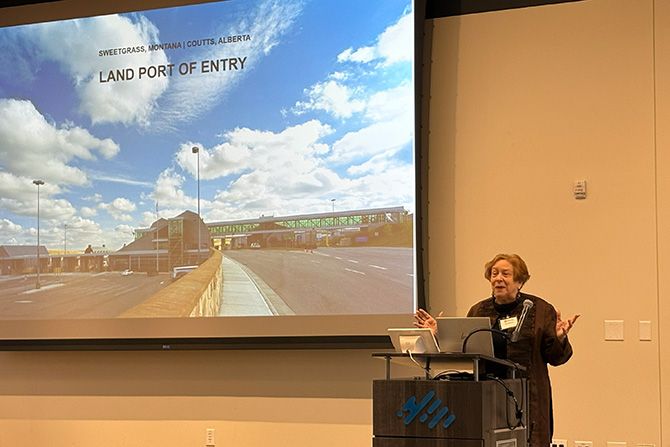
The keynote speaker, Carol Ross Barney, FAIA, of Chicago-based Ross Barney Architects, is a widely respected designer and the 2023 recipient of the AIA Gold Medal. Her work includes the replacement of the Murrah Federal Office Building in Oklahoma City and the redesign of the Chicago Riverfront. Her presentation, “Future Cities: Big Ideas and Small Solutions in Everyday Architecture,” explored how public spaces and places serve as essential infrastructure that make our cities livable, and how these public spaces express our history, values and future vision. Carol’s presentation was sponsored by a grant from the Wyoming Board of Architects and Landscape Architects and, as the last speaker of the day, was open to the public.
In addition to the outstanding speakers, we had seven exceptional tours during the conference, as noted on the following pages.
The Southeast Wyoming Welcome Center. The conference kicked off on Thursday evening with a tour of the SEWYWC, led by its designer, Joey Carrasquillo of Anderson Mason Dale Architects and Susanne Norton. As a welcome center, the facility features public facilities, exhibit space and office space for the state tourism department. The building is a dynamic structure that includes three different sources of onsite energy: wind, solar and geothermal.
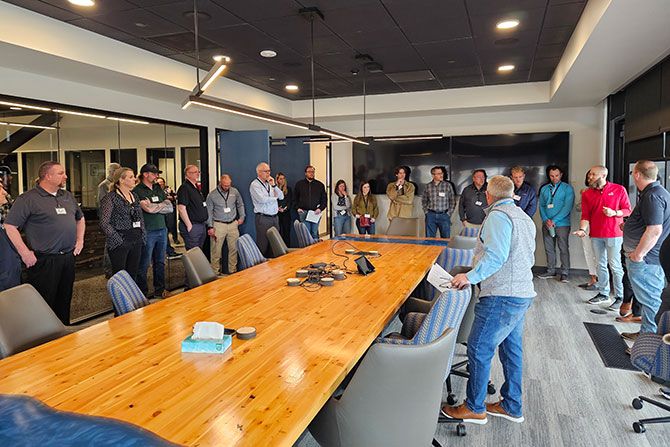
Blue World Headquarters. During a break on Friday, we were given a tour of the building where the conference was being held. The tour was led by Abbie Reece of Open Studio Architecture, the director of facilities at Blue Federal Credit Union; Jera Likely of Martin & Martin Engineering; and Evan Gerwig of Brinkman Construction, the project’s builder. This 8.6-acre site, formerly an abandoned shopping center, is now home to three stories of offices and a two-story community wing featuring amenity and event space.
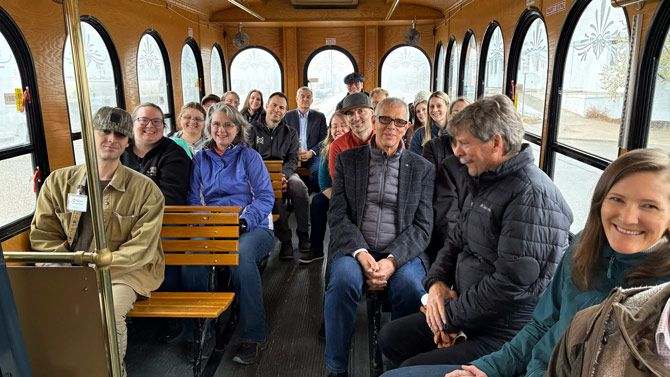
Architectural Trolley Tour of Downtown Cheyenne. Following the keynote speaker, Randy Byers of The Design Studio and Glen Garrett, along with the trolley tour staff, took participants on a trolley tour throughout downtown Cheyenne. They provided background on the architectural history and urban development of the community, from its early days as a railroad town in the Dakota Territory to its emergence as the capital of the State of Wyoming.
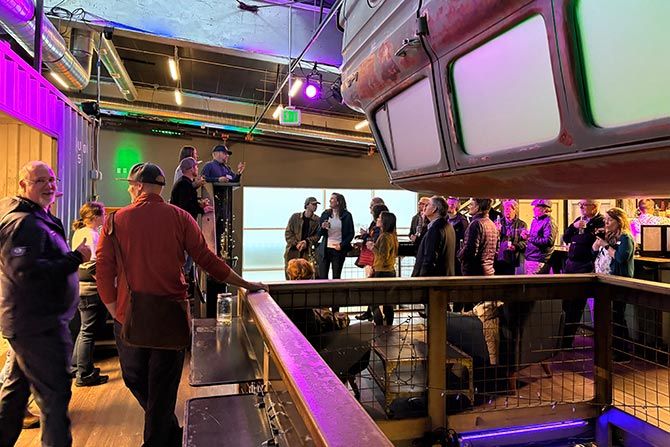
Railspur Bar & Grill. This project, designed by Winters Griffith Architects, entailed converting an Office Occupancy to an A2 Occupancy as a lively bar and grill, utilizing a ghost kitchen food truck model. During the tour provided by Jamie Winters, participants learned about the history, design vision and non-traditional building methods employed in the original design and its transformation. Following the tour, participants had dinner and socialized.
Cheyenne Children’s Museum. The tours on Saturday started with the new children’s museum located in the West Edge area of Cheyenne. The designers of the project, Rachel Delventhal and Kendra Shirley of Studio Red, led the tour and explained that it was designed for experiential learning from a child’s perspective. It is the initial piece of a larger vision for a new interactive hands-on center for young minds to explore science, technology, engineering, art and math-based (STEAM) exhibits, providing a place for those with physical, sensory, intellectual and mental disabilities.
MHP Regional Headquarters. The new regional headquarters, designed by Winters Griffith Architects for a 90+ employee accounting firm, was an adaptive reuse transforming a warehouse built in the early 1900s into a modern workspace that seamlessly blended historical charm with contemporary functionality. Jamie Winters led the tour.
Cheyenne’s Historic West Edge Reimagined. As a fitting finale for a conference focused on “Edges,” participants were treated to a walking tour of the West Edge district of Cheyenne, led by Mark Christensen of AVI. Participants learned how, by addressing flood control, mitigating brownfields and providing public spaces, the development set the stage for private investment to transform the stock of brick warehouses into a fresh and vibrant part of downtown.
Acknowledgements
Special thanks to the planning team who did the impossible and pulled this conference together in only 90 days. This included Rachael Delventhal, Clint Taylor, Ellen Martin, Kendra Shirley, Katelyn Larsen, Carl Kohut, Mitch Blake, Susanne Norton, our Executive Director Jessica Howard and myself as conference chair.
We are also deeply grateful to our sponsors. These included our annual sponsor, Pella; conference sponsor, Sampson Construction; the two meal sponsors, Cator Ruma & Associates and Groathouse Construction; and all of our exhibitors. Blue Federal Credit Union deserves special recognition for providing the conference space nearly free of charge for our event. We also owe special thanks to the Wyoming Board of Architects and Landscape Architects for providing a grant in support of our keynote speaker.