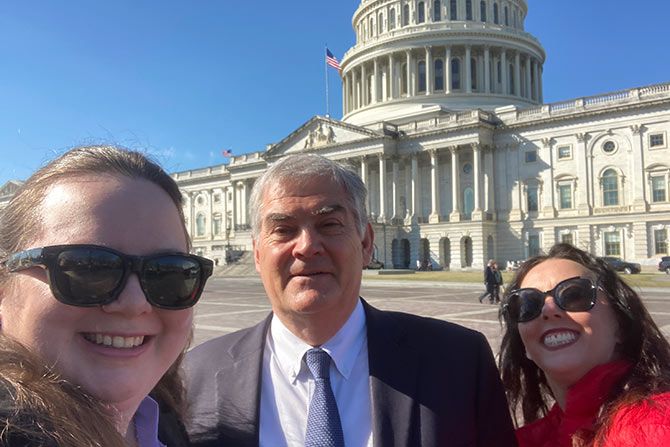




In February, AIA Wyoming was represented by Jessica Howard (executive director), Ellen Martin (associate director), and myself at the annual Leadership Summit in Washington, D.C. In the opening keynote, AIA National President Evelyn Lee, FAIA, noted that membership in AIA National has surpassed 100,000 people, marking a significant milestone for our professional organization. She also identified several areas where our profession is evolving in response to emerging technologies and expanding spheres of influence, and explored alternative career paths in architecture.
Evelyn lead an engaging panel discussion with Leah Alissa Bayer, AIA, NOMA, NCARB, who runs a remotely-staffed, virtual firm specializing in multi-family housing, custom residential, master planning, and workplace design, and Illya Azaroff, FAIA, who is our president-elect for AIA National and runs a practice focused on disaster response, climate adaptation, resilient design, and regenerative planning strategies. Illya’s office operates on a 32-hour work week schedule, which caught everyone’s attention.
Baratunde Thurston provided another keynote address, “How to Citizen.” Baratunde is the writer and host of the podcasts “How to Citizen with Baratunde” and “Life with Machines,” as well as the host of the TV show “America Outdoors.” He spoke about using the word “citizen” as a verb, and suggested that there are four key elements to being a “citizen architect”:
- Show up and participate.
- Understand power (i.e., influence).
- Commit to the collective, not individual power.
- Invest in relationships.
There were several excellent breakout sessions centered on contributing to design, developing our local AIA chapters, and understanding AIA National policies. One that caught my attention was AIA National’s focus on using the Framework for Design Excellence in their award programs. They encouraged individual chapters to incorporate these principles into their local awards.
Wyoming Wednesday: Meeting Wyoming’s Congressional Leadership
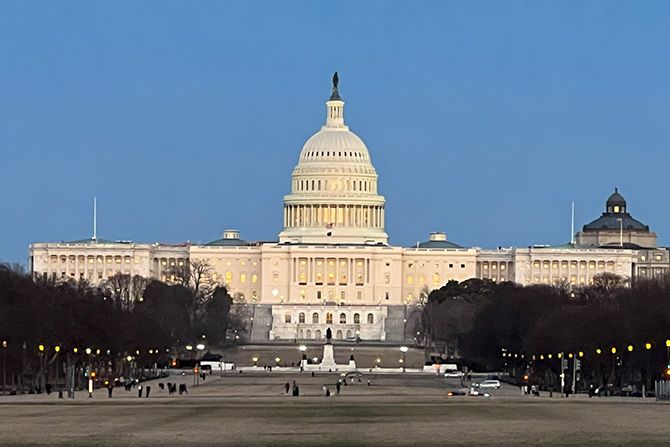
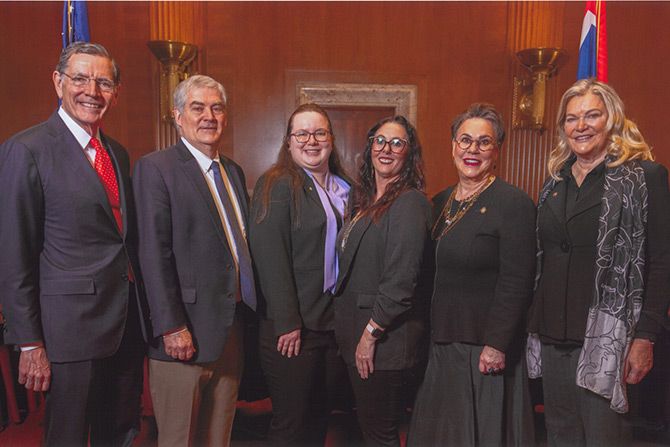
Following the keynote and breakout sessions, Jessica, Ellen, and I went to Capitol Hill to lobby Wyoming’s congressional leadership. We were fortunate to meet with Senators Barrasso and Lummis, as well as Congresswoman Hageman, at “Wyoming Wednesday” in the Dirkin Senate Building. We were able to spend a fair amount of time with their staff members discussing the following issues.
Design Freedom for Federal Architecture
The Ask: Support the Democracy in Design Act and oppose any efforts to remove local control, hinder design freedom, or add bureaucratic hurdles for approval of federal building designs.
Arbitrary Fee Limitations for Federal Contracts
The Ask: Direct the Federal Acquisition Regulation (FAR) Council to amend the FAR to align with clear statutory language, and pass legislation to eliminate arbitrary fee limitations and mandate Qualified Based Selection (QBS) fair fee negotiations for all architectural and engineering (A/E) design contracts across the federal government.
Architects Support More Housing
The Ask: Fund or expand programs that enable the construction of affordable and workforce housing.
- Support the HOME Investment Partnerships Program.
- Support Community Development Block Grant (CDBG) Program.
- Support Low-Income Housing Tax Credit (LIHTC) and Workforce Housing Tax Credit.
Architects Support Community Resiliency
The Ask: Act decisively to prioritize resilience in the nation’s built environment.
- Support FEMA Hazard Mitigation Assistance Program.
- Introduce legislation similar to the Resilient AMERICA Act to better protect our communities from the devastating impacts of natural disasters.
- Introduce legislation similar to The Shelter Act, which offers a 25% tax credit for qualified disaster mitigation expenditures, capped at $2,500 for individuals and $5,000 for businesses. Incentivize investments in resilience by individuals and businesses, encouraging proactive measures to protect properties and communities.
Tax Incentives for Architects
The Ask: Protect or extend the tax relief provisions affecting the architecture profession in upcoming tax-focused legislation.
- Support the R&D Tax Credit.
- Support R&D Expensing.
- Support 199A Pass-Through Deduction.
- Support Low-Income Housing Tax Credit (LIHTC) and Workforce Housing Tax Credit.
- Support 179D Energy-Effcient Commercial Buildings Deduction.
- Support the Historic Tax Credit (HTC).