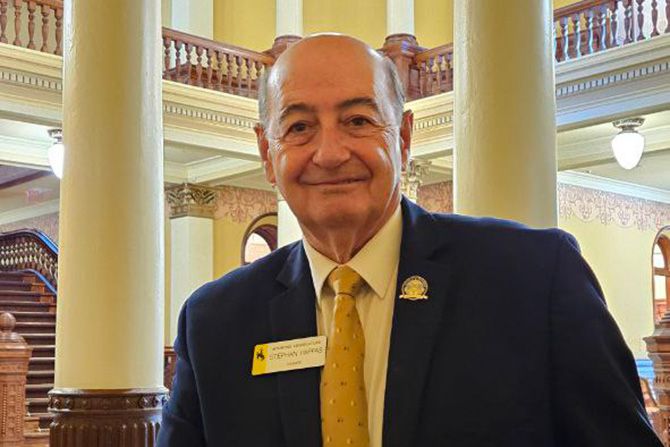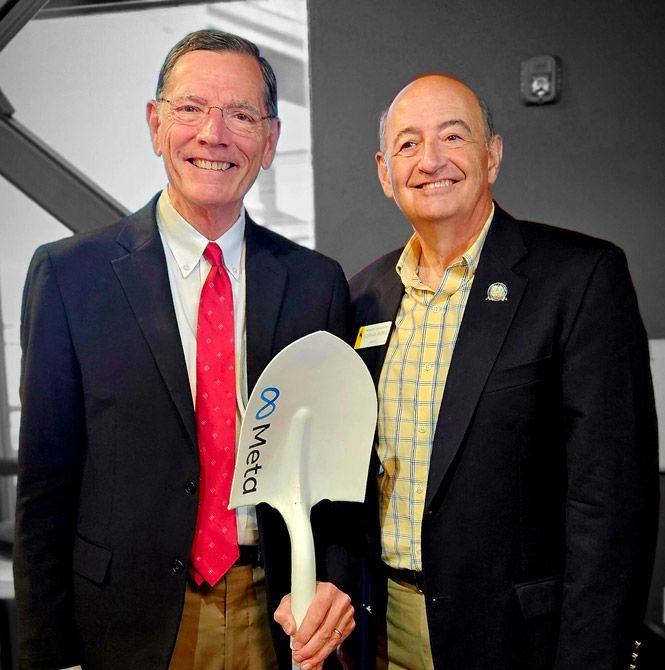




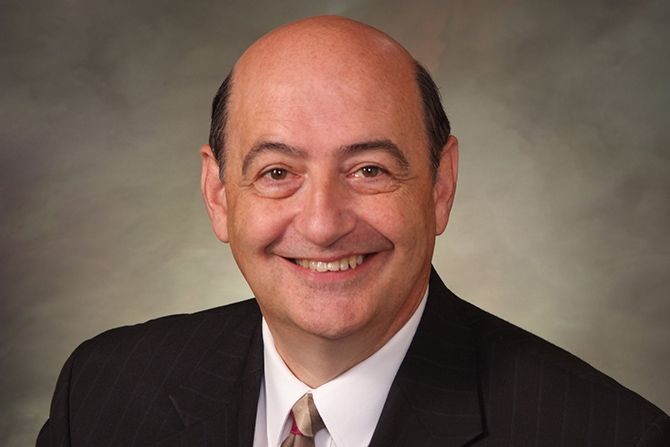

Stephan A. Pappas has lived a life of service. His dedication to the community and to individuals alike has enabled him to excel in many areas of his life. He currently serves as Wyoming’s Senator for District 7 and is a board member and treasurer of the World Hellenic Inter-Parliamentary Association. Stephan retired from the U.S. Air Force as an Assistant Adjutant General with the Wyoming Air National Guard in 2009.
In addition to all of that, Stephan is an accomplished architect and past president and owner of Pappas & Pappas Architects P.C. His eagerness to learn and ability to make friends wherever he goes have earned him accolades, and one could say that he truly is a Renaissance man.
We recently had the chance to talk with Stephan and learn more about his life and his many careers. We are honored to feature him as a legend of our industry in this issue of Wyoming Architecture.
The Early Years
Stephan was born in Cheyenne, Wyoming, in 1950. He and his four siblings were taught the value of hard work, an appreciation for the great state of Wyoming and a love for their family’s Greek heritage by their father, Andrew, also an architect, and their mother, Theoni.
Following in his father’s footsteps wasn’t always part of Stephan’s plan. After graduating from high school in 1969, Stephan attended college, pursuing a physics major. However, after his first year of school, he began to question that career path. Stephan recalled, “When I got to thinking, if I got a physics degree, I wouldn’t be able to live in Wyoming unless I taught in a school. There aren’t any physics jobs in Wyoming.”
So, Stephan assessed his options and realized that he really liked his father’s career. As a child, his father would take Stephan to jobs and to visit with clients. His father had also been on the State Board of Architects for many years and worked throughout the state of Wyoming. Stephan decided that a career in architecture held promise. “It’s certainly a design-oriented profession, and my mindset is on the creative side, so I enjoyed that. Also, the profession deals with people, and I’m a people person,” said Stephan.
After continuing at the University of Wyoming for another year to take engineering courses, Stephan transferred to the University of New Mexico. He received a Bachelor of Fine Arts in architecture. He then attended the University of Arizona, a very design-oriented school, influenced heavily by Frank Lloyd Wright. “I was the president of the student body, and was also on the first council, which is the Student Senate for the entire university and is probably the roots of my political ambitions,” Stephan said. He went on to graduate as an “Outstanding Graduate,” an honor that few earn and was presented with a diploma made of copper, a tribute to the school’s strong ties to the mining industry.
A Leap of Faith
Upon graduation, Stephan returned home to Wyoming and started working at his father’s firm: Kemper and Pappas. He worked on one of the largest state office buildings, the Herchler Building, and once that project went into construction, Stephan and his dad decided that they would like to start their own firm. Two years later, in 1982, this dream came to fruition, and Pappas and Pappas Architects P.C. was established. “My father was my partner, and I spent about half of my career working with him,” Stephan said.
“When we started off, it was slim pickings when it came to getting work, as we were a brand-new firm. We took the work we could get, even though they were really small projects in the beginning,” Stephan recalled. “The first project we did was a toilet remodel in the House Chamber at the Capitol. I think the whole fee was $1,500. That was a humbling experience after just coming off the Hershler Building project.”
Knowing that everybody has to start somewhere and not being willing to give up, Stephan and his father pressed forward, slowly but surely growing the practice. Their firm was always small; at the most, there were seven employees and eventually larger projects started coming in. “We did a lot of WYDOT work for the highway department, did work for schools, hospitals and commercial buildings, but most of my architectural career tended to be on government projects,” Stephan said.
“My father retired when he was 67. I continued to work on my own until I was 70 years old. At that point, I asked myself, ‘Why am I still workin’?’ While I still enjoyed architecture, I was getting increasingly tired of running a business. In addition, I was busy in the legislature and decided to retire from architecture to focus on public service. That was in 2020.”
Dual Careers
“I’ve always worked two jobs,” Stephan said. “Early in my architectural career, I designed a facility for the Air National Guard Base, they recruited me.” He joined the Guard late in life, just one month before his 35th birthday. Even so, he retired as a Brigadier General.
“During my service, I was what they call an Assistant Adjutant General for the Air National Guard. I ran the Wyoming Air Guard. I advanced rapidly in my career, having been selected for the rank of General in just 17 years,” Stephan recalled. “I attribute my rapid gain in rank to joining at a later age and having the experience and wisdom to manage my career better.”
Integrity first, service before self and excellence in everything you do are just a few of the lessons that Stephan learned during his service. He explained, “I’ve taken those things I learned in the military into my architectural career. On the flip side, many things that I learned in my architectural career I took into my military career. Both careers helped each other.”
Lessons Learned
“Early on in my career, I felt like a hotshot designer,” Stephan said. “But if you want to climb up in the management of an architectural firm, and want to do larger project, you’re not going to do much design anymore. What you will do is manage architects and staff — not just manage them, but also provide leadership for them.”
Since he had always had a second career, traveling the world with the Air Force, still trying to run a firm, Stephan learned to rely on his people. “My job was leadership, both in the Guard and in my firm,” he said. “I’ve never been a micromanager. I’ve always empowered people to do what they want to do. Sometimes they’d mess up, but I would never break their spirit. I would say, ‘You know what went wrong, so how are we going to fix it?’ And they would come up with a fix, and learn a valuable lesson.”
“Even though I had built up a successful firm, running a business can take a toll. You have to procure the work, so you’re always looking for opportunities. You have to put in the effort and submit proposals,” Stephan said. “And then there is healthcare, payroll, workers’ comp, all the forms, all the government stuff, everything it takes to run a business.”
Towards the end of his career, he changed his business model. “Even though I liked to do a lot of design early on, I realized that some of the larger projects would be unattainable for my small firm,” he said. Stephan went on to explain that when you don’t have experience in a particular field, you don’t get the job. “I would seek out architects who were project-specific architects. If I was doing a sports center, I would hire people who specialize in sports architecture. If I was doing a hospital, I would hire people who did a lot of hospitals, and so on.” Ultimately, Stephan would remain the architect of record and would maintain direction and approval over the design.
“I enjoyed that part of my career. There was not much technical work. I worked with clients, my consultants and with regulatory authorities, whether city, county, state or federal,” said Stephan. “I worked with people with whom I have always enjoyed.”
A Love of the Profession
“I love all architectural styles. However, being Greek, I have always enjoyed classical architecture — the Greek Parthenon, the Ionic and the Doric, the Corinthian columns. I never designed in that style, but I really like classical architecture because of its symmetry and proportion,” Stephan said. “But modern and contemporary architecture styles are what I have mostly worked in.”
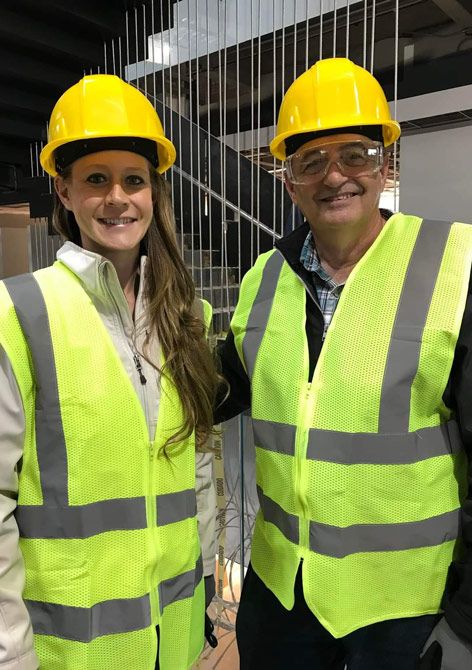
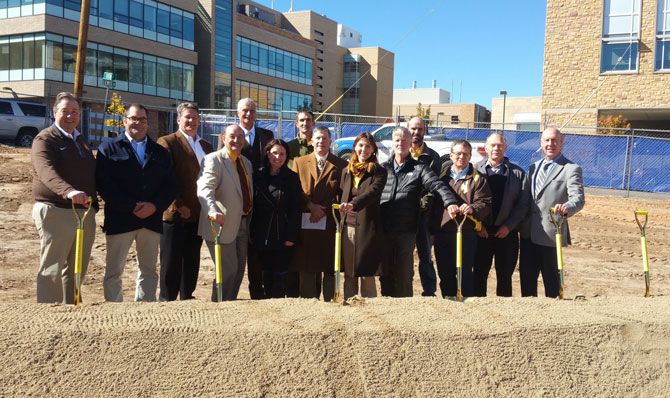
Towards the end of his career, Stephan designed some of his favorite projects. One of them was the Marion H. Rochelle Gateway Center, a $36 million project. “It’s an iconic three-story building with huge cantilevers. It has a learning center that’s oval and a large ballroom. The entire building is illuminated with LEDs that change colors, and there is a big dynamically illuminated monolith,” Stephan recalled. This project was funded by private donations and supported by the University of Wyoming Foundation. This allowed Stephan great design latitude to do what he wanted.
A few other projects that stand out to Stephan were the Carey Junior High, his last project in Cheyenne, and the Cheyenne Frontier Days Carriage House, an Old West museum filled with carriages that celebrates the rich history of the area. Another project of note was on the north end zone of War Memorial Stadium at the University of Wyoming. It was the Mick & Susie McMurry High Altitude Performance Center, where Stephan worked with Coach Craig Bohl and the UW Athletic Department to create a state of the art facility filled with innovation for the university’s athletic programs.
Focusing on the next generation of architects and sharing his love for the occupation is important to Stephan. “I try to mentor young architects and encourage them to pick up their pencils and pens and hand sketch. Sketching is something that opens the mind,” Stephan said.
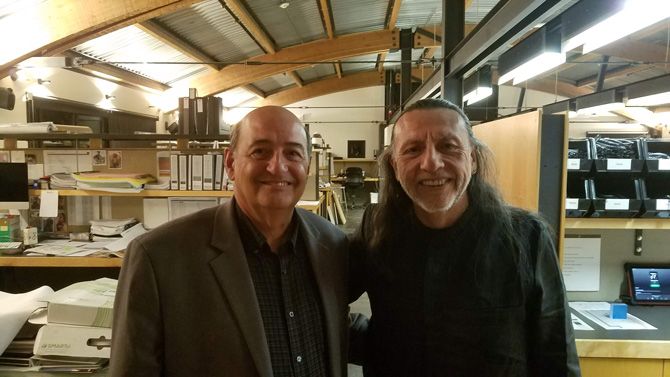
“I started mentoring many years ago. It changed over time, starting with architects, but then included interior designers, graphic designers and engineers. I would spend time with these young professionals, and over time, we became pretty good friends,” Stephan said. “I still see many of them on occasion, and I enjoy seeing how they have grown and how their capabilities have gotten better, and now, many of them are training the next generation of professionals.”
Last Thoughts
“I would just like to encourage the profession to continue to be honest and design with integrity. I’ve noticed a decline in civility in my political career, and that really hurts my heart. So, I ask all the folks who are working in architecture today to work with civility, with integrity and with honesty,” Stephan continued, “If they do that, the health of the profession will be on solid ground.”